Updated November 3, 2025
Renting a dumpster is one of the easiest and most affordable ways to get rid of large amounts of waste from home cleanouts, remodels, or construction projects. However, not everything can go in a dumpster, and loading the wrong items can lead to unexpected fines and extra fees that drive up your total cost.
At Hometown, we know how important it is to get the most value from your dumpster rental. This guide explains what you can and can’t throw in a dumpster, including common prohibited items and disposal tips to help you avoid additional charges and stay compliant with local regulations.
Jump to:
Find local dumpsters and see prices
Request availability and pricing from dumpster
rental companies near you.
What Can't Go in a Dumpster Rental
Before loading your dumpster, it’s crucial to understand what items are prohibited. Most dumpster rental companies deliver their containers to local landfills and must follow strict rules to avoid penalties. These rules are set by federal, state, and local regulations, so always ask your dumpster provider about items that are banned at the landfill they plan to use.
Improper disposal of prohibited items can create hazardous byproducts, contaminating soil and local water sources. To stay compliant and avoid extra fees, make sure you communicate clearly with your dumpster rental company about the materials you plan to dispose of.
Common Dumpster Prohibited Items
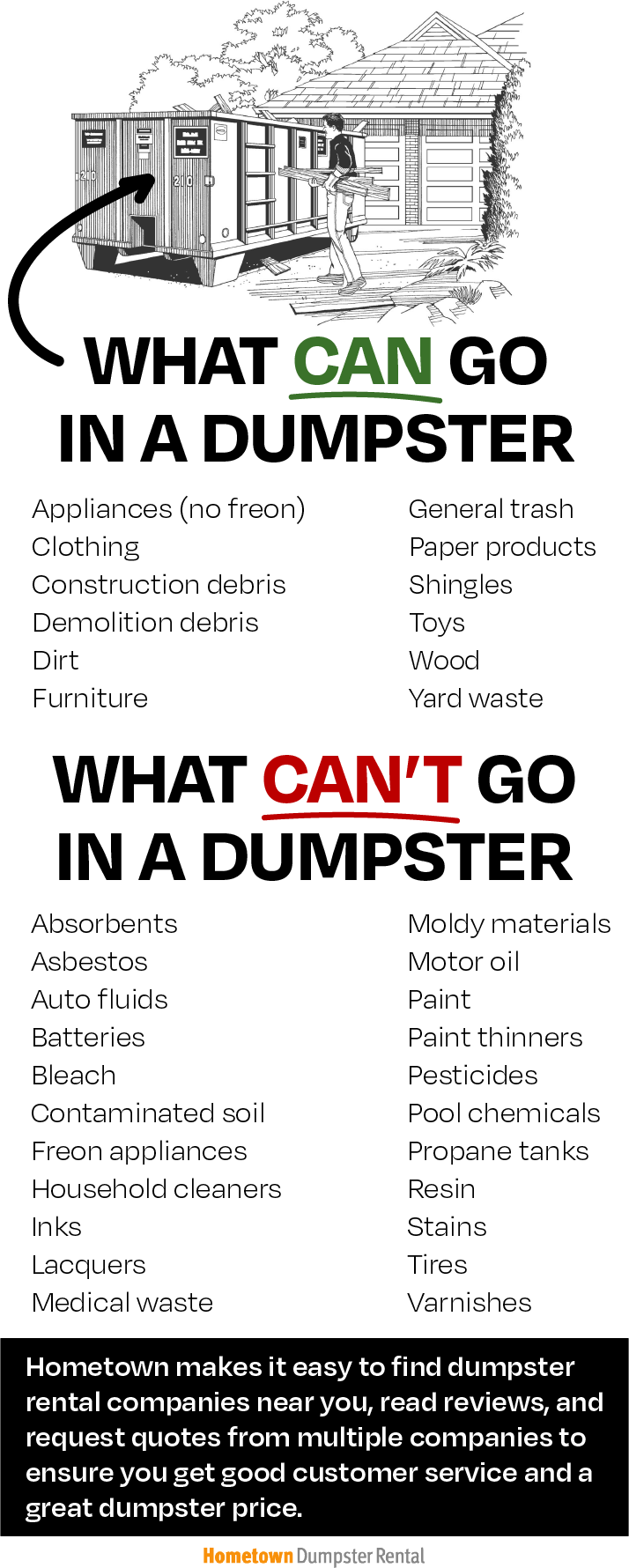
Many of the following materials are typically banned from landfills:
- Bleach and other household cleaners
- Car batteries
- Ink and resin
- Materials containing asbestos or mold
- Medical waste
- Motor oil and other automotive fluids
- Paint, lacquer, varnish, and stain
- Pesticides and herbicides
- Pool chemicals
- Rubber tires
Even if local regulations differ, putting prohibited items in a dumpster can result in additional fines and fees. When in doubt, always provide a detailed description of your disposal needs to your dumpster rental company. They can advise you on safe and legal alternatives.
Learn more:
- How to Dispose of Household Hazardous Waste
- How to Get Rid of Unwanted Tires
- Asbestos: Everything a Homeowner Needs to Know
What Can Go in a Dumpster Rental
What Items Can Go in a Dumpster
Most non-hazardous items are allowed in dumpster rentals, making them ideal for a wide variety of projects. Common materials include:
- Household trash and used junk
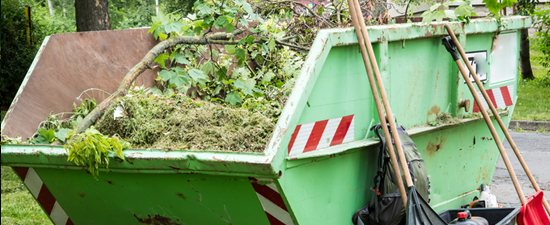
- Yard waste and garden debris
- Appliances, furniture, and electronics
- Recyclables
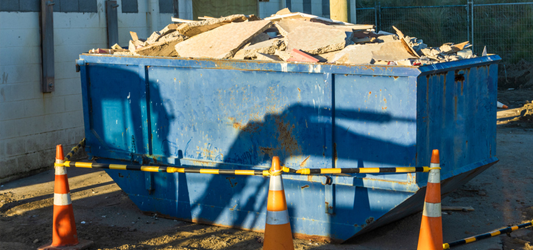
- Construction debris such as wood, drywall, or tile
Dumpster Weight Limits
Even accepted items have limitations due to safety and disposal regulations. The heavier your materials, the less you can load without exceeding the dumpster’s weight limit.
Example:
- A 10 yard dumpster filled with household trash can usually reach full volume.
- The same dumpster used for concrete removal will fill up in weight before it reaches full volume, requiring careful loading to avoid unsafe hauling conditions.
Choosing the Right Dumpster Rental Company
Not all dumpster rental companies operate the same way. Your choice can affect:
- Rental price
- Accepted materials
- Service quality and availability
Some companies accept items that others do not. That’s why it’s important to be transparent about your disposal needs when requesting quotes.
Tips to Get the Best Dumpster Rental
Request at least three quotes to compare price, services, and disposal options.
Read verified customer reviews to ensure you’re renting from a reputable company.
Ask questions about weight limits, accepted items, and scheduling.
At Hometown, we make this process simple:
- Find reputable dumpster rental companies in your area
- Read verified reviews
- Get answers to common waste disposal questions
By planning ahead and comparing options, you can save money, avoid fees, and complete your project efficiently.
Contact reputable dumpster companies near me
Keep reading: