Updated November 11, 2025
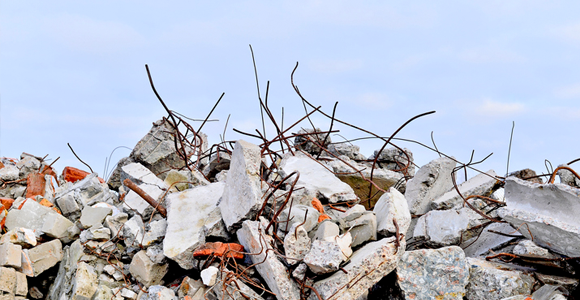
When your construction or demolition (C&D) project wraps up, the job isn’t truly finished until the debris is gone. Piles of leftover concrete, wood, drywall, and other materials can quickly add up, creating a mess that’s both time-consuming and physically demanding to clean up on your own.
Fortunately, there are several efficient ways to handle construction debris removal, from renting a roll-off dumpster to hiring a professional junk removal company. Each option offers unique benefits, costs, and convenience levels depending on the size and scope of your project.
In this guide, we’ll break down the most common construction and demolition debris disposal options, explain how each works, and help you determine the best and most cost-effective way to get your job site cleared quickly and responsibly.
Jump to:
Find C&D debris removal in your area
Rent a Dumpster to Dispose of the Debris
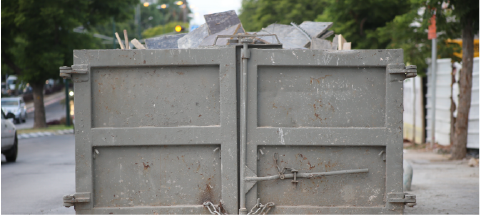
When tackling a home renovation, remodeling, or demolition project, renting a roll-off dumpster is one of the most cost-effective ways to dispose of C&D debris. If you have the time, strength, and safety gear to load the material yourself, a dumpster rental lets you manage debris efficiently and affordably.
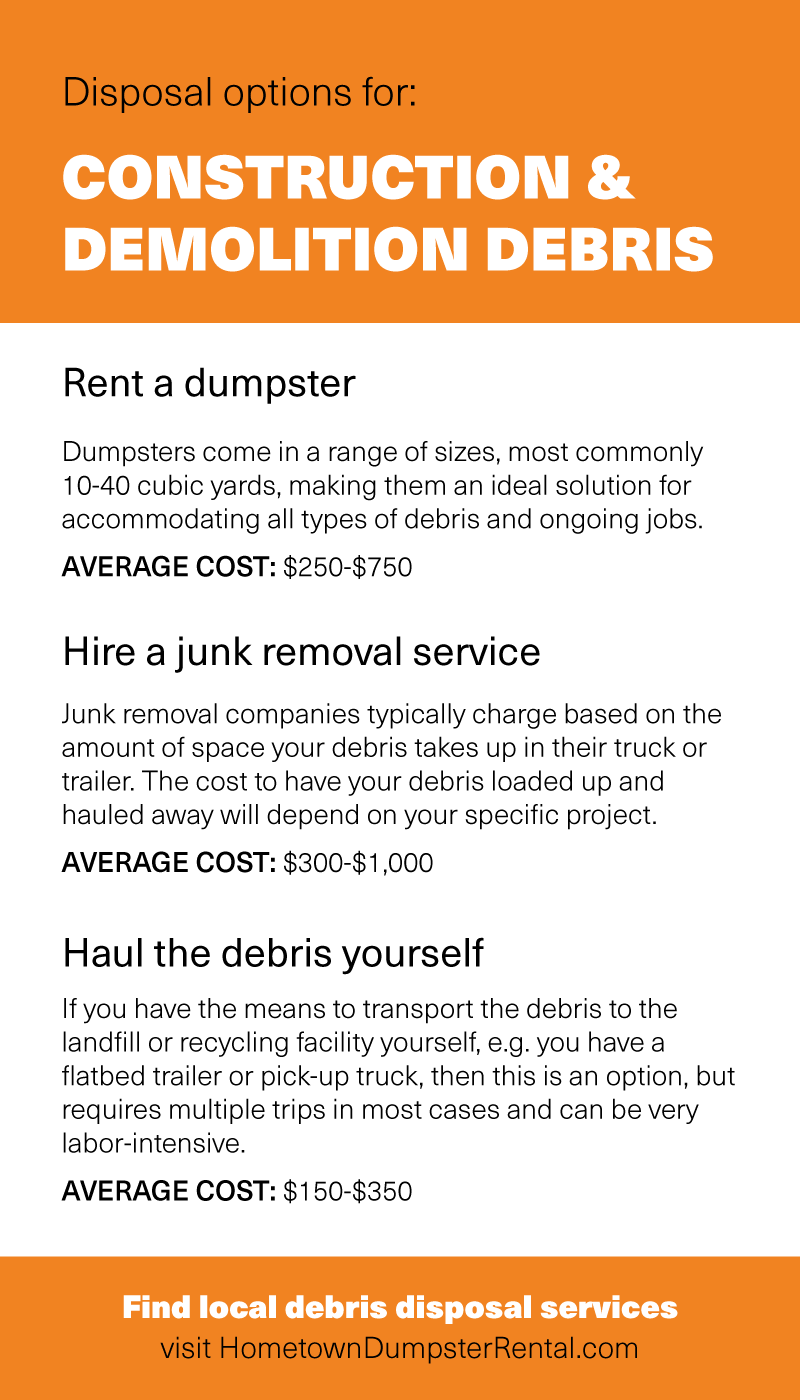
Roll-off dumpsters come in sizes ranging from 10 to 40 cubic yards, making them ideal for projects of all scales, from a small bathroom remodel to a full home teardown. Each container features open tops, and most have swinging doors for easy loading of heavy materials like concrete, wood, drywall, and flooring.
The average cost to rent a dumpster ranges from $250-$750 but could be more or less depending on where you live, the dumpster size you rent, the material you're disposing of, who you rent from, etc.
Choosing the Right Dumpster Size
A 10 yard dumpster is great for smaller demolition or renovation projects, including:
- Bathroom or kitchen renovations
- Deck or fence removal
- Flooring tear-outs
- Wall, baseboard, or trim removal
For example, a bathroom remodel or demolition typically requires a 10 yard or a 20 yard dumpster, while a larger home renovation project may call for a 30 or 40 yard dumpster.
Factors That Affect Dumpster Rental Costs
Dumpster rental prices vary based on:
- Dumpster size and weight limit
- Type and weight of debris
- Rental duration
- Local disposal and permit fees
- Overage or tonnage fees
- Who you rent from and where you live
While it might seem cheaper to rent the smallest dumpster, underestimating your debris volume can be a headache for you and cost you additional money in the long run. Opting for a slightly larger size upfront can help you avoid any potential extra fees or delays.
To save money, rent from a locally owned dumpster company rather than a national chain. Local providers often offer lower prices, faster service, and more flexible rental terms.
Compare Local Dumpster Rental Prices
Hometown makes it easy to find and compare local dumpster rental companies near you. Compare multiple companies with one click, including pricing and customer reviews, and choose the best roll-off dumpster for your project, all in one place.
Learn more:
- Calculating Wet Debris Weight to Avoid Dumpster Overage Charges
- Renting a Dumpster for Interior Demolition Debris: Keys to Success
Compare debris dumpster pricing
Request availability and pricing from dumpster
rental companies near you.
Hire a Junk Removal Service to Remove the Debris
If you want the fastest and most convenient way to clear out your construction or demolition debris, hiring a professional junk removal company is your best option. Instead of spending hours hauling heavy materials or making multiple trips to the landfill, a junk removal crew can handle the cleanup from start to finish — no labor required on your end.
While hiring professionals typically costs more than renting a dumpster or hauling the debris to a landfill yourself, the time savings and convenience can outweigh the added expense. Junk removal services are especially valuable when you’re short on time, physically unable to lift or move debris, or simply want the job done quickly and safely.
C&D debris can include sharp objects, rusty nails, broken concrete, or moldy materials that pose safety risks if handled improperly. Professional junk removal companies are trained to manage these hazards safely and dispose of all materials in accordance with local regulations.
Another major benefit of hiring a junk removal service is their commitment to responsible disposal and recycling. Many companies separate recyclable materials like metal, wood, and concrete to keep as much debris out of landfills as possible. This is an environmentally friendly choice that helps repurpose old materials into new construction products.
Here’s how the process typically works:
- You provide photos or request an on-site estimate.
- The crew gives you a quote based on the amount and type of debris.
- If you agree to the price, they’ll often start hauling immediately.
Pricing varies depending on your project’s size, debris type, and location. Most junk removal services have a minimum pickup fee of around $100, but hauling debris from a renovation project ranges anywhere from $300-$1,000 on average depending on the amount and type of debris.
Local junk removal companies often provide the best rates and customer service compared to national chains, so it’s worth requesting multiple quotes to compare pricing and availability.
Hometown makes it easy to find trusted, locally owned junk removal companies near you. Enter your zip code, answer a few quick questions about your project, and you’ll receive free quotes from licensed and insured professionals with verified customer reviews, so you can hire confidently and get your job site cleared fast.
Keep reading:
- How to Choose the Best Junk Removal Company
- Junk Removal Cost Calculator
- Junk Removal Checklist: Everything You Need to Know
- Comparing the Cost of Junk Removal to Dumpster Rental
Find C&D debris removal near you
Haul the Debris Yourself
A third option for disposing of C&D debris is to handle the cleanup completely on your own by hauling the waste to a local landfill or recycling facility.
While this can be an affordable solution for small projects, it’s not always the most efficient or practical option. Once you factor in fuel costs, landfill fees, and the time and effort required, hauling debris yourself can cost anywhere from $150-$350 on average, and can be much more labor-intensive than expected.
Before committing to a full DIY disposal approach, ask yourself:
- How close is the nearest landfill or transfer station that accepts C&D debris?
- Does your truck or trailer have enough capacity for the materials you need to haul?
- Will you need to rent a trailer or truck, adding to your costs?
- How many trips will it take to finish the cleanup?
- Are you familiar with local disposal and transport regulations?
Your time and energy are valuable, and if you find that hauling debris yourself takes multiple trips or requires additional equipment rentals, you may save both time and money by hiring a professional.
If you only have a small amount of debris, taking it to the landfill yourself might make sense. However, for larger-scale projects, like home remodels, deck removals, or demolition jobs, renting a roll-off dumpster or hiring a junk removal company is often the most cost-effective and hassle-free choice.
Need help deciding which is best for you? Hometown makes it easy to compare local dumpster rental and junk removal services in your area so you can find the most affordable and efficient solution for your project.
Compare construction dumpster pricing
Request availability and pricing from dumpster
rental companies near you.
Keep reading: